Tuesday, August 08, 2006

Linden May be Model for Clean Energy Farm


From the center of one of the most pollution prone areas of NJ may come a fossil fuel free energy center:

From today's Star Ledger:
City officials are considering developing its former landfill as one of New Jersey's first energy farms, where windmills, solar panels and methane gas would generate electricity.

Monday, August 07, 2006

Pod Pad


The original idea was to accomodate music festival lovers who don’t like camping. You can leave the waterlogged camping to the students and rest up in relative luxury after a hard day’s partying in a Travelodge ‘Travelpod.’ Made from clear poly-carbonate glass, these mobile hotel rooms are 18 feet long, 7 feet wide and 8 feet high and comes complete with a double bed, bedside tables, lights, duvet, pillows, a dressing table, mirror, chair and toilet.
The Travelpod is still at trial stage, though Travelodge officials expect to charge a very budget price of $50 per night.
We can also imagine a potential market for backyard guest rooms.

Sunday, August 06, 2006

Property Tax Increases Far Outpace Income Growth in Metro NY Region

It may not surprise many, but the NY Times latest study of property tax increases in the area really brings it home.

Property taxes grew two to three times faster than personal income from 2000 to 2004 in the suburbs surrounding New York City, a sharp reversal from the 1990’s,

Saturday, August 05, 2006

Butterfly Type

This is one of our favorite new interactive websites. These are all letters made from closeups of butterfly wings photographed by one of the world's leading nature photographers, Kjell Sandved. It took him 24 years to complete this project--without harming the butterflies. Anyone can send e-cards for free(click on the title), but you will be encouraged to by photographs and posters as well.

Wednesday, August 02, 2006

Too Darn Hot

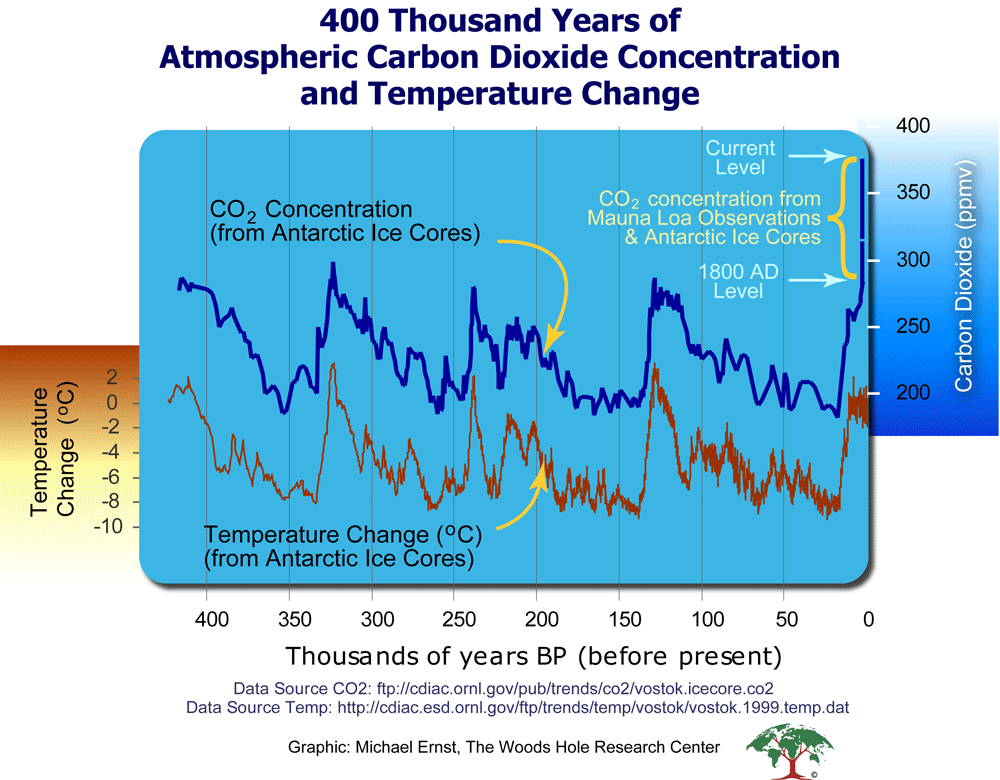
Whether you agree or disagree with Al Gore's case for Global Warming, Thursday's free webcast will offer a unique opportunity to discuss and debate the issue.
Be Our Guest For An Exclusive Webcast On Al Gore's An Inconvenient Truth
 
> Date: Thursday, August 3rd
> Time: 7:00PM - 8:00PM EST
> 
Ellis College would like to invite you to attend a
 FREE, exclusive webcast on Al Gore's controversial
 and topical film, An Inconvenient Truth. Led by
award-winning faculty professor, noted-author and a
 member of the Indiana Academy of Sciences, Josh
 Dobkins, this webcast will provide a unique view of
 this highly debated topic and an exciting open forum
 for discussing, analyzing and debating the
conclusions brought forth in the film. You are
 encouraged to view the film prior to the webcast. Don't miss your oportunity to be a part of this
 thought-provoking event. Register today!
 How To Register- Register for your FREE Ellis College guest pass
 by clicking on the Free Guest Pass links on the Ellis College Homepage at
 http://ellis.nyit.edu/
 - Click the GO box on the appropriate webcast to
 begin the transmission. 
 We Hope To Welcome You As A Member Of Our Online
 CommunityQuestions? 800-405-5844
Here are a few faq's on Global Warming courtesy The Union of Concerned Scientists:

Monday, July 31, 2006

"Haunted" Ohio Property Owners Sue Bloomfield Marks

It's those Weird NJ guys making news again. Bloomfield vagabond journalist-editors Mark Sceurman and Mark Moran have both gone big time with a book of "Weird US" stories, and have expanded their franchise to other states, including Florida, Illinois, Wisconsin, Pennsylvania, California and New England, and a TV series on the History Channel.

Now they're facing a lawsuit over a haunting tale in "Weird Ohio."
The family that has owned the historic Staley Mill since 1825 claims the book has created a 'stigma' and attracted trespassers and vandals.

The suit seeks in excess of $25,000 in damages plus more than $25,000 in punitive damages and expenses. Doesn't seem like a lot, but you can buy a decent home(non-haunted) in some Ohio towns for less.

http://ecorealty.blogspot.com/2006/06/6000-homes-7-hours-from-nyc.html

Sunday, July 30, 2006

Coasting the Remediation Highway

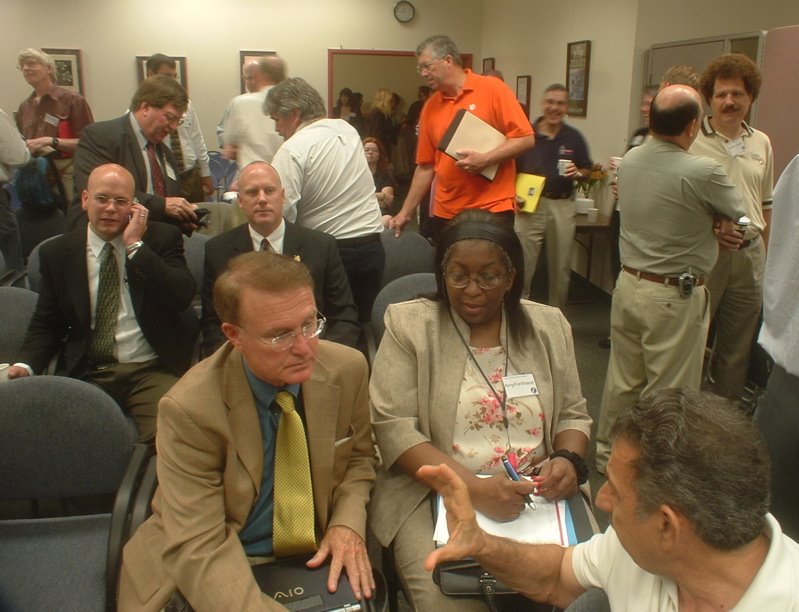
Dr.Robert Taylor(yellow tie), Montclair State's Professor of Environmental Management, confers with Nick Joanow from Bloomfield's ThirdRiverbank Association.

Our first visit to DEP Headquarters in Trenton on Friday, was at the above-titled conference for local officials, environmental commissions, and non profit organizations to learn about new developments in remediation and how to make remediated sites work for you.

The program was coordinated by NJ DEP by and for Municipal Officials, Environmental Commissions, and Non-Profit Organizations. Although most local officials were conspicuous by their absence, we were very impressed by comments by the Irvington town administrator, and the Mayor of Hamilton --which is now the 8th largest municipality in the state.

Friday, July 28, 2006

Avoid Using Home Equity to Pay Off Credit Debt


From The Mortgage Weblog
by Christi Lundquist

Many homeowners around the world are turning to home equity loans, and home equity lines of credit, and even their IRAs and 401(K) funds to decrease or eliminate their credit card debt. Partly fueled by the recent growth in home equity and home values, partially due to lower interest rates on home loans, thousands of people per day are shifting their debt from their cards to their homes. While in some cases this can be beneficial, there are some very real hidden dangers to be aware of when chosing an option that involves taking from your home equity.

One thing that many borrowers are not aware of - or are chosing to ignore - is the definite possibility of homes in your area experiencing a "leveling off" of home values. While over the past few years the equity seemed to grow at an unreasonable rate - without much effort on the part of the borrower, that same equity could essentially disappear just as quickly. In addition to leveling home values, most ARMs are scheduled to begin to reset as early as 2007, and many homeowners will find themselves with a much higher monthly mortgage payment. For those who have a large enough monthly income to compensate for the higher payments, the jump in interest rates may not have as severe of an effect. But most borrowers will experience payment shock - even without adding in the credit card debt, and have a hard time with the monthly payments.

If a borrower has a low monthly payment now, and a higher than normal property value - it can cause a false sense of security, and lead to choices that would not otherwise be made based on the equity in the home. One of the most important thing to remember, is that there are collectors paid to collect on the credit card debt, and by not making the monthly payments on the debt - you could have your cards taken away. When you struggle to pay your monthly mortgage payments, the price is much higher - you could eventually lose your home. Taking the extreme risk of paying off credit card debt may seem like a wise decision due to the difference in interest rates between credit cards and mortgages, but weighing your options as well as the risks may save your home. And the biggest danger of all?? Most Americans who use their home equity to pay off their credit card debt refuse to change their habits and lifestyles, and actually see their zero-balance cards as an invitation to go shopping - perpetuating the cycle. However, in this cycle, there is one detrimental factor - home values will probably not continue to experience the rise, leaving the borrower with very few recovery options for the future.

Wednesday, July 26, 2006

How Heat Can Cool

Someone has finally figured out how to convert the excessive heat due to global warming into electricity. The basic idea is to use a synthetic fluid that boils at a very low temperature (58 F). Thus, the steam can drive a turbine. We're a little confused on how "Ambient cooling" can get the liquid back to 58 degrees if we are using to it air condition our house (presumably when it is warmer than 58 degrees).

Tuesday, July 25, 2006

Rainy Day Policies


Like many Montclair homeowners, Gerri Willis, Money Magazine contributing columnist, was chagrinned to learn that her insurance policy had some major loopholes.

"Had the oak fallen on our house, our homeowners policy would have paid for more of the cleanup and replanting. But because our loss wasn't structural, my husband and I were looking at $20,000 in out-of-pocket costs. Now I know what most homeowners find out only after a disaster: My policy was no blanket. It was more like Swiss cheese."

To learn more about spotting gaps in your insurance, read "What I learned when my tree fell down"

Sunday, July 23, 2006

When Roofs Are Vulnerable


Paul Bianchina of the Inman News Service has some timely advice on insuring that your roof has a fighting chance aginst storms like we had last week.
"....During winter rain and snow cycles as the wood becomes saturated, the curling and warping becomes a little less noticeable, but during each summer's drying cycle it will become increasingly more pronounced.

Because the wood is no longer flat, the roofing is also very vulnerable to damage from impact. Even very small tree branches that come loose during windstorms can crack the shingles, and walking on them during the heat of a summer's day can do a tremendous amount of damage...."

http://db.inman.com/inman/content/subscribers/inman/column.cfm?StoryId=060101PB&columnistid=bianchina

Saturday, July 22, 2006

Suburban Archeology


The uprooted old-growth trees on Edgmont revealed a dumping ground for vintage household discards. This bottle was made in the Oranges -- labeled "...Decker &..."

Friday, July 21, 2006

Bloomfield's Share of Damage

Baristanet.com has had lots of great photo-coverage of Montclair and hundreds of comments. Our favorite Bloomfielder comment was by "glee":

It ain't just Montclair! Mountain Ave. in Brookdale is devastated as are many other areas in Bloomfield. Toffee-nosed Montclair received all of the media attention while scrappy Bloomfield picked up and carried on. Let's share this natural disaster, folks, not hog it all to ourselves. Anyway, tales of coincidence, irony, and good and bad timing abound concerning this storm. I'm with the tree huggers from another post. Don't blame the trees or use this as an excuse not to plant more. Disasters like this, thankfully, are few and far between in our area. The improved air quality, increased shade, greater aesthetic beauty (imho) of the streets and parks, and the increased living environment for birds, etc.... The energy of that storm was stupendous.
Click on images to enlarge. Mountain Rd. at Claremont
South end of Mountain Road
Garrabrant St
Oakview School
Parkview Rd along Brookdale Park
Mayor's House

Wednesday, July 19, 2006

MicroBursting

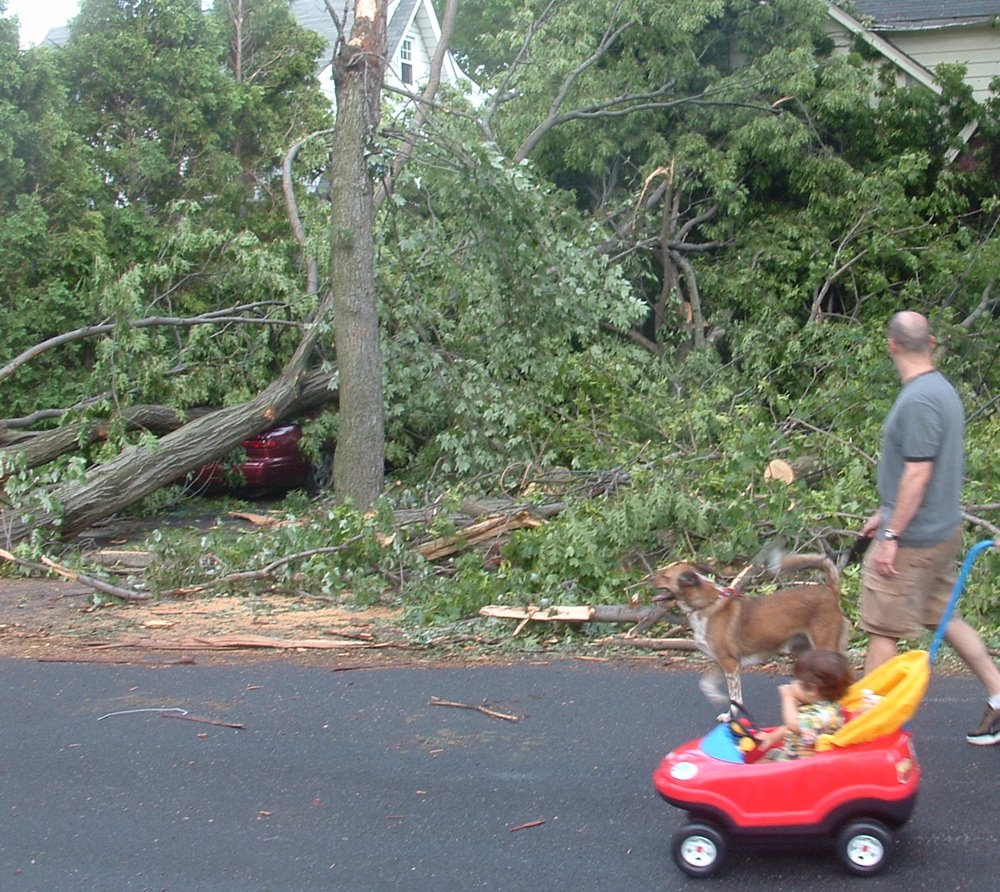
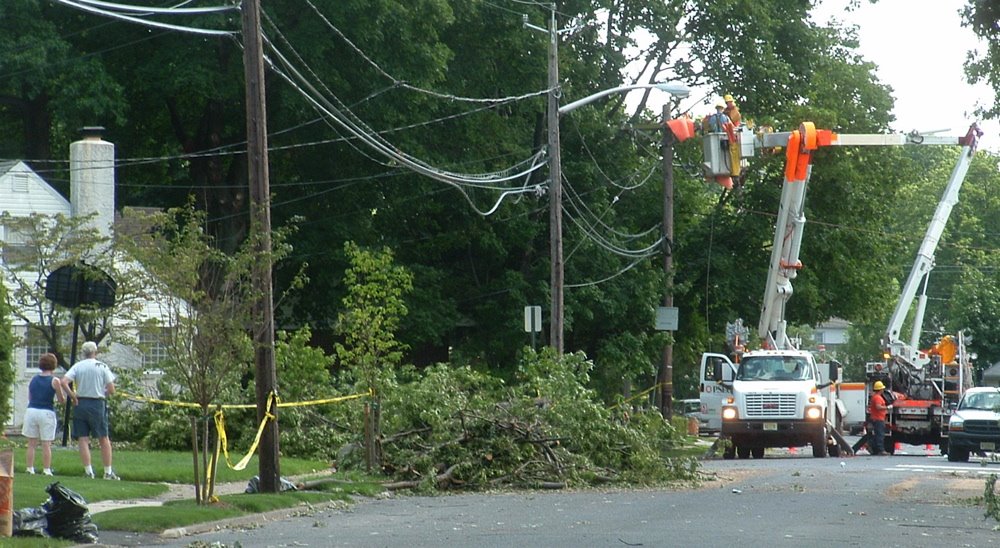
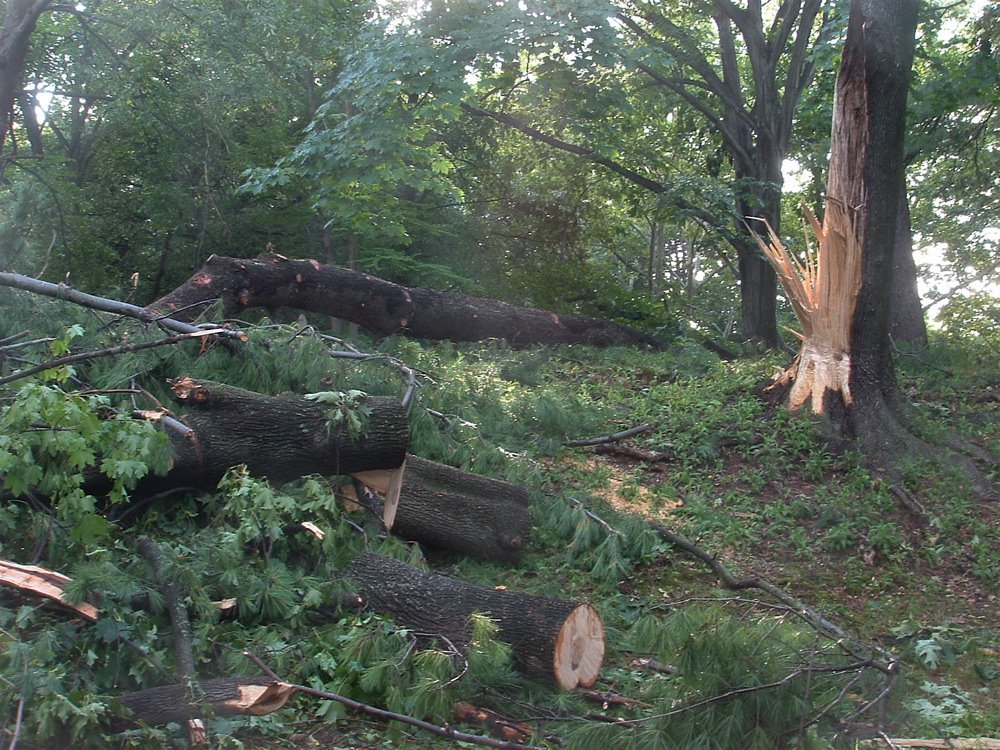
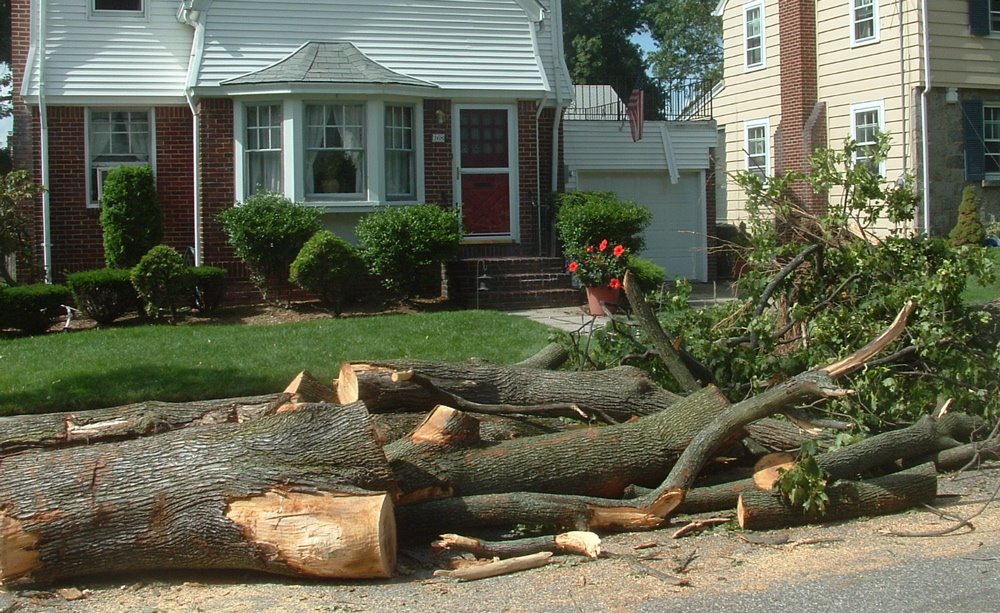
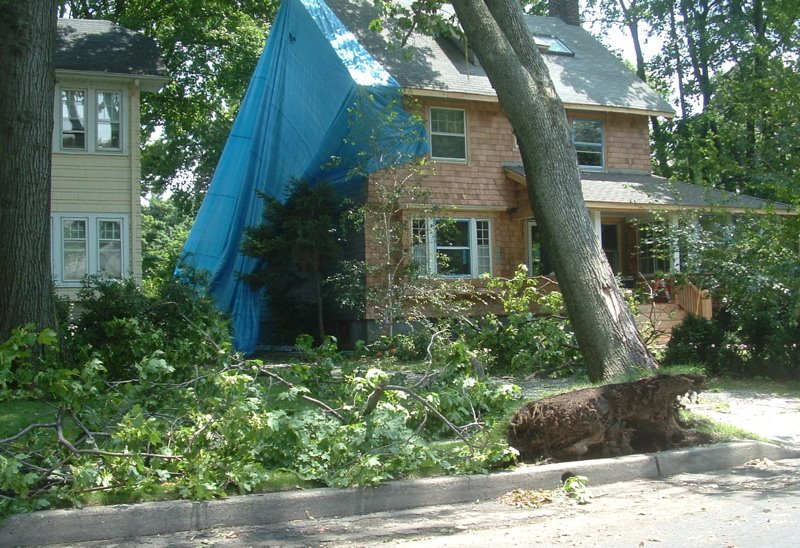
The camera was buried in my bag at 10:05 PM Tuesday night, but we'll never forget the sight of those tree limbs attacking the hood of our tiny sedan as we ventured south of Broad St.near Yantecaw. After hitting a wall of trees, we backed up and manouvered around them minus a sideview mirror.The first group from Wednesday's shoot were all in Montclair.We're setting up a new site for Bloomfield pix.

Sunday, July 16, 2006

Wayne, Edison, Parsippany Make Money's Top 100


FORT COLLINS, Colo. (AP) --
The magazine named Fort Collins is the "Best Place to Live" in America for 2006, in a list that also included five New Jersey cities.

The magazine cited Fort Collins for its natural setting, vibrant downtown and the presence of Colorado State University. The city 60 miles north of Denver and not far from Rocky Mountain National Park also outpaced other places in "ease-of-living" measures such as commute times and recreation.

The monthly magazine's August edition ranks Fort Collins No. 1 among 745 places with populations greater than 50,000.

Five Garden State cities were also listed in the top 100: Parsippany, Cherry Hill, Edison, Middletown and Wayne.

Cities are ranked on a series of factors, including cost of living, employment markets, median income, property taxes and housing prices. Crime, congestion, public schools and climate also go into the mix, executive editor Craig Matters said.


The annual "best places to live" feature has appeared in Money for many years, Matters said. Last year the magazine focused on prime suburban areas. The rankings and associated data available online proved so popular editors decided to expand to small cities.

The goal was to highlight communities with fewer than 300,000 residents that are not dependent on metropolitan areas for jobs, art and entertainment venues and recreation, he said.

Last year, Fort Collins made Outside magazine's list as a "dream town" to live and work in part because of the area's abundant recreational opportunities.

National attention doesn't necessarily attract more people or businesses to those communities, Matters said.

"We are not a leading indicator, we are following," he said. "People already know these are great places to live."

On the Net:

Money magazine: http://money.cnn.com/magazines/moneymag

Saturday, July 15, 2006

Slippery Slopes redux


Remember Bloomfield's snow capped mountains from last winter?
They're part of a Liongate development tract that has been" frozen" in its tracks for over 5 years.
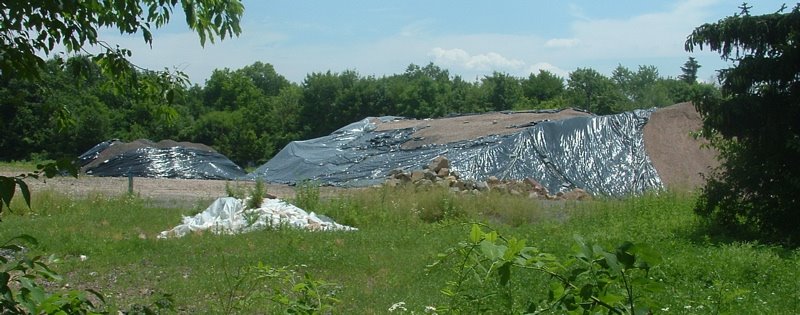
The partially remediated remains of the rubble that was once Scientific Glass was finally forced to cover up by the NJ DEP. The apparent intent was to protect the public from exposure to contaminants they found in the soil early in 2005.
The 6 mil polyethelyne makeshift cover appeared to be a collection of oversized garbage bags. The top photo was taken on "wrap day" during the first week in June. The middle photo was taken 3 days later. The bottom photo on July 16th. Maybe they should have hired Christo.

Wednesday, July 12, 2006

Bubblelicious Prose


from Michael Stetz
San Diego Union Tribune:

They are poets – poets of properties to be sold. Through their eyes, so many things – bathroom tiles, for instance – become “exquisite,” “enchanting,” “beguiling.”

They paint pictures: “As you enter through the gate, up the gentle meandering drive, you know you have reached a special place. . . . ”
Or: “Picture yourself at the center of downtown excitement. Catching afternoon rayson a sun deck high above the trees. Watching the sun set over the bay . . . .”
Man. Real estate people. They're hogging the thesaurus.

Not long ago, selling homes in San Diego was easy. The market was so hot that all you had to do was write something like this: “House. In San Diego. With, um, some windows.”

And you'd get 47 offers in nine minutes.

Now, though, with more houses being offered for sale and competition for buyers heating up, real estate agents seem to be on the prowl for any lilting adjective they can find. And little wonder.

It now takes 62 days to sell a house. In June 2004, it took 22 days.

Check out a recent edition of the glossy magazine Dream Homes San Diego. It's loaded with delicious digs and dressed-up sentences: “Right in the heart of our dynamic city, but radiating tranquillity and serenity, this expansive estate is located in a lush canyon with views of downtown and the bay.”
And it's only $2.2 million, by the way.
Real estate agents have a history of doing remarkable things with the English language, of course.

When they write “cozy,” they mean really, really, really, really, really tiny.

Views? They are sweeping. Or breathtaking. Or stunning. They are never, “Just kind of so-so.” Entrances? They soar. Or they're warm and welcoming. Never will an entrance be just a door.

Who writes this stuff?
Portia Smith, for one.
“I probably spend more time on them than I should,” said Smith, who has been in the real estate business only a few years and writes her clients' blurbs herself. “I laugh at myself. I can spend a half a day on them.”
Smith is good.
“Wake up to the 'Palace Amongst the Clouds!'” she wrote in Dream Homes San Diego, about a condominium in downtown San Diego. Check that. It's not simply a condominium, as Smith makes clear in the ad. It's also an “Urban Antique Penthouse.”
Smith thinks it's important to try to capture the feel of a home through words.
“I try to be original,” she said. “I try to make it sound exciting.”

Being bold and rich with description can be important, particularly now in the cooling housing market, said Charles Jolly, president of the San Diego Association of Realtors, who has 30 years in the business.

Take that line about the “gentle meandering drive.” If the ad merely said something bland, such as “long driveway,” it probably wouldn't spark the same interest, Jolly said.
The goal of all this gab is to grab a buyer's interest, Jolly said.
Check this out, about a condominium in Mission Beach, described on the Dream Homes Web site:
“See the ocean, breathe the ocean, live the ocean. . . . ” (If you breathe the ocean, won't you actually drown?)
If that doesn't knock your socks off, it's described this way, too: “From the moment you pass through the artful stainless steel doors, you will want to live at South Beach, San Diego Style.”
Hmmm. Sounds good.
So you decide to check this place out personally.
You stand out front, with the Pacific crashing right before you.
The sun is up.
The wind is warm and soft.
And . . . Oh no. The hyperbole is contagious. The only word that comes leaping to mind – “enchanting.”

Tuesday, July 11, 2006

Cool It!


Summer is here and everything's looking up: temperatures, fuel prices, and electrical bills are all climbing. What can you do about it? The Sierra Club has some answers.Try these tips to save money and help the planet keep its cool.

Monday, July 10, 2006

Jersey County Among Best Places List?

Progressive Farmer is out with it's latest survey on The Top 200. We thought we might have missed NJ so we did a Find "Jersey" on the list. We found that number 162 was--oh well--Jersey County, Illinois. If it's any consolation, Delaware also got shut out. But New York had many counties selected including number 1.

Sunday, July 09, 2006

Get Chuckie


After dealing with that rascally rabbit, Pat Kenschaft writes of her latest challange:
Some non-human is challenging me. The very morning after I wrote about giving left-overs to the food pantry, I noticed something had chomped off the tops of the mature lettuces that I was expecting to donate next week. Pride goeth before a fall. The next day the kohlrabi leaves were gone. Etc. This past Tuesday I caught a woodchuck, but on Wednesday I noticed some carrot tops were newly clipped, and the stone I had put to block the burrow under my fence was moved. Several things in the main garden were munched.

What will the garden look like next Saturday? Will I be humiliated by a woodchuck? Is it humanly normal to feel a sense of panic about a week before opening my garden to the public? Surely, there will be some tomatoes, peppers, cucumbers, zuchinni, and Malabar spinach to show off -- maybe even some more Malabar seedlings to give away. But will there be great empty spaces where a woodchuck has kept my aspirations in check?

Anyway, I hope some of you do come check up on my garden next Saturday, July 15, from 9:00 AM to noon -- my first MORNING Open Garden. Two experienced gardeners at 51 and 56 Gordonhurst Avenue (Bob
McLean and me) have raised their vegetables for decades. There will be displays in my front yard. The rain and sun seem to be making many things grow rapidly, including weeds, and it will be interesting to see how much of my garden remains for humans. I suspect quit a bit will.

Happy summer!

Pat

Saturday, July 08, 2006

Higher prices, higher rates: The 1st-time homebuyer squeeze

It's never easy buying your first home. But in the past year, it's gotten a lot harder.

NEW YORK (CNNMoney.com) -- What a difference a year makes when you're in the market for a new home, especially if you're a first-time buyer.

Thanks to a combined jump in mortgage interest rates and home prices, a starter home in many areas of the country could cost you several hundred dollars more per month today than if you bought it last year.

Housing Don'ts
If total cost of owning each month exceeds by 25% or more the cost of renting, you may be better off renting.
Spend no more than 30% of gross income on housing.
Nationwide, median home prices rose at annual rate of more than 10 percent in the first quarter of 2006, according to the National Association of Realtors.

Meanwhile, rates on adjustable rate mortgages, the most common for first-time buyers, are up more than a percentage point.

The rate of home-price gains varies widely from market to market. In Gainesville, Fla., for instance, the median sales price of existing family homes rose 31 percent, or about $50,000, to $210,100 between the first quarter of last year and the first quarter of this year, according to NAR.

The percentage gains were more muted - but still high - in richly-priced markets like the New York City-Northern New Jersey area, where the median price rose 11.2 percent to $458,500, an increase of about $46,000.

So for the first-time home buyer in Gainesville or New York, those price and rate increases can mean an extra $400 to $450 in monthly payments to own a home. That assumes you put down the same amount this year on the home as you would have last year.

Friday, July 07, 2006

Larry Kramer, 1938-2006


Although he spent 14 years teaching Math, Science, and Social Studies courses in Montclair middle schools(preceeded by 4 years teaching at Nutley High), Larry is best known for his "post-retirement" effords to expand and enhance open spaces and a unique nature preserve in Bloomfield.

A former chemical engineer and science teacher, Larry Kramer was a
founding member of Friends of Clark's Pond and Third River, a local
group that has worked to restore Bloomfield's last remaining natural
pond. Larry was instrumental in establishing the nature preserve at
Clark's Pond, where he spent thousands of hours designing the native
plant restoration and the wildflower meadow and leading nature walks.
Larry's dream was to use the preserve as an outdoor classroom for Bloomfield school children. Born and raised in Montclair, he moved to nearby Bloomfield in the 90's when he found an apartment located steps away from Clark's Pond.

Larry participated in all kinds of community meetings from preservation groups to the Town Council. After listening to many of our impassioned comments he would calmly suggest an effective way to implement our ideas or offer his wisdom in a variety of ways. Often with wry humor:
At one of the packed planning board meetings, he questioned the architect of the proposed condos on a flood plain of the former Scientific Glass site. After looking at the drawing of the 3 story townhouses he quietly asked where on the roof tops would the rowboats be tied. This literally brought down the (town)house! Larry is one of the reason’s that--years later--the Liongate area is still open space.

His guiding passion was that we should all be stewards of our immediate wild spaces. Yes, he had his passions,
but I never experienced him raising his voice in anger.

Larry has helped make Bloomfield a more desirable place to live.

Sunday, July 02, 2006

Locked Out


From floods to $$$. Trenton is still in Lockdown Mode.
We're off to Ohio.
See Ya!

Saturday, July 01, 2006

Friday, June 30, 2006

Inconveniences

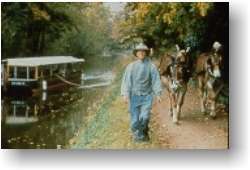
Canal Path Along Delaware River

We checked out Al Gore in "An Inconvenient Truth" the night before being overwhelmed with national news coverage of the latest post-Katrina flooding along the Delaware River and Mid-Atlantic region. Even The White House was in the flood zone. But our President still has no plans to see the film. Maybe he's waiting for the DVD.

Wednesday, June 28, 2006

Is the Market Finnished?

From springwise.com comes this Finnish wrinkle on Zillow and other innovative Real Estate marketing tools:

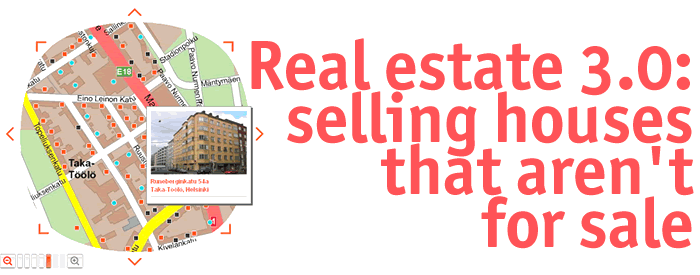
Igglo combines large amounts of real estate information into a customer friendly package that could alter how the housing market operates, by letting potential buyers 'pre-order' houses that aren't yet for sale.

The Finnish company has photographed every building in Helsinki, with more towns to follow, and combines these photographs with satellite images and maps. Every property is listed, not just those that are currently on the market. (Their tagline is: "Your house is already on Igglo.")

Potential buyers can earmark a building, street or neighbourhood they're interested in, and post offers online. This lets potential sellers find out how desirable their property is, even if they weren't actively considering selling. Buyers also receive an alert when a property in their earmarked building or area comes up for sale.

If demand and supply meet, Igglo handles the transaction for a lower fee than is charged by regular real estate agents (less than 2%). Lower fees are made possible by the fact the Igglo agents don't get involved until buyers and sellers have found each other. The company is looking to expand the service to other big cities.

Interesting way of turning the real estate market upside down, letting demand nudge supply in the right direction, and moving the market from push to pull. One to watch!

Website: http://www.igglo.fi

Monday, June 26, 2006

Bring on the Ice!


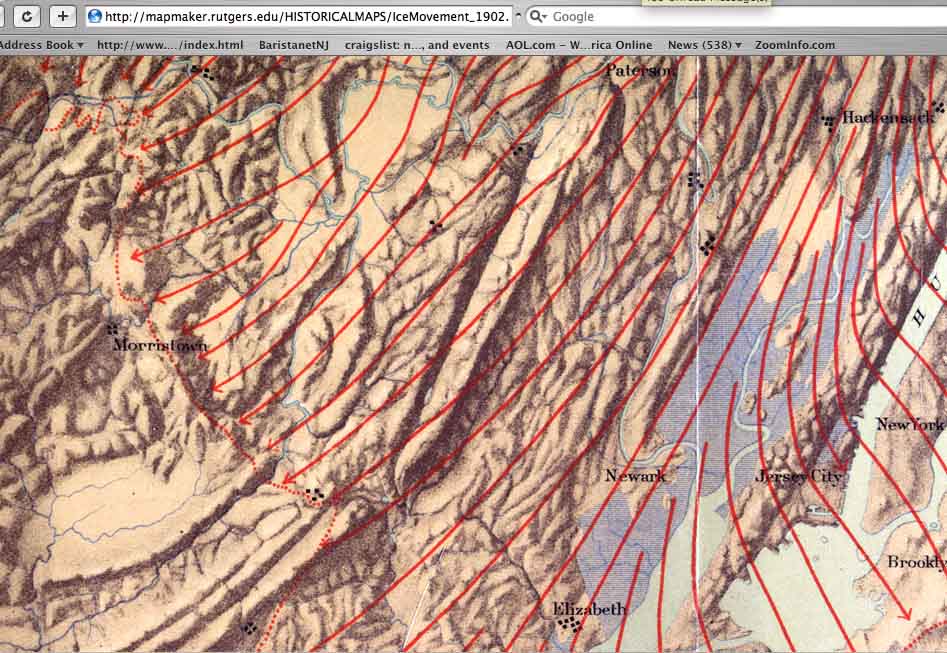
Map time again. One with a cool feel to it. Millenia before global warming, there were the Ice Ages. This circa 1900 map from Rutgers' historical Library shows how our last ice Age pushed defined the hills and valleys of North Jersey. Click on the map to enlarge.

Sunday, June 25, 2006

$6000 Homes 7 Hours from NYC


Our family roots are in the Canton Ohio area.
So when we saw Sunday's NY Times headline about the city with what may be the most undervalued homes in the country, we were especially intrigued. Canton is just south of Akron, which is just south of Cleveland. Like many Rustbelt towns, the region suffers from massive job losses in the manufacturing sector. No Bubble here.

Saturday, June 24, 2006

Totally Tubular Skylights


From Mother Earth News:

If you’d like to light your home naturally and efficiently, consider installing tubular skylights.

With a clear, domelike lens that gathers sunlight and transmits it into a room via a ceiling fixture and a highly reflective piece of tubing, they are ideal for retrofitting bathrooms, hallways or walk-in closets. Some models even come with flexible tubes, so you can snake them around obstructions in your attic. And you don’t have to be Bob Vila to add them to your home — most do-it-yourselfers can install one in a couple of hours using common tools.

Tubular skylights cost about $200 to $500 uninstalled, and are highly efficient: one 21 inch model, for example, produces about 13,900 lumens under the right conditions — the equivalent light output of six 48-inch, 40-watt fluorescent lights.

Even on cloudy days, a tubular skylight can provide at least as much light as a 100-watt incandescent bulb. The natural sunshine tubular skylights provide is also much more attractive than the light of their bulbous brethren.
For locations that require constant illumination, tubular skylights are especially economical: one 10-inch tubular skylight, providing an average of 4,200 lumens of light for eight hours each day, will save you about $70 annually.

To purchase a tubular skylight, or for more information, contact one of the companies listed below:

Bristolite Tubular Skylights
(800) 854-8618
www.bristolite.com

ODL Tubular Skylights
(800) 253-3900
www.odl.com

Solatube Skylights
(800) 966-7652
www.solatube.com

Friday, June 23, 2006

TV Buggers Top Tree Huggers


(Reuters) - Americans are less interested in spending time in natural surroundings like national parks because they are spending more time watching television, playing video games and surfing the Internet, according to a study released on Tuesday.

The study, for The Nature Conservancy, found per-capita visits to national parks have been declining for years.
National park visitation data starting in 1930 peaked in 1987 at 1.2 visits per person per year. But by 2003 it had declined by about 25 percent to 0.9 visits per person per year, said Oliver Pergams, an ecologist at the University of Illinois who analyzed the data for the study.
The data, based on government statistics and other sources, were taken as a proxy for interest in nature in general.
Researchers tested more than two dozen possible explanations for the trend and found that 98 percent of the drop in national park visits was explained by video games, movie rentals, going out to movies, Internet use and rising fuel prices.
Other possible explanations such as family income or the aging population were ruled out.
There was a sufficiently high correlation between declining national park visits and the burgeoning use of electronic media that led Pergams and his associate, Patricia Zaradic, believe the two are linked. "It made us feel fairly certain that there is an association," Pergams told Reuters.
The study, to be published in the Journal of Environmental Management, concludes that the trend has negative implications for environmental stewardship.
"We may be seeing evidence of a fundamental shift away from people's appreciation of nature to 'videophilia' which we here define as the new human tendency to focus on sedentary activities involving electronic media," the researchers said.
"Such a shift would not bode well for the future of biodiversity conservation."
Nature Conservancy President Steve McCormick said the study suggests Americans and their children in particular are losing their connection to the natural world.
"When children choose TVs over trees, they lose touch with the physical world outside and the fundamental connection of those places to our daily lives," McCormick said.

Thursday, June 22, 2006

Global Warming and NJ Beaches


From Hugg.com:

When scientists consider the effects of global warming, there is a lot they don't know. But one thing's for sure: Sea levels will rise. This rising water will be felt along the artificially maintained beaches of New Jersey, even on the ocean bluffs of California. According to a 2000 report by the Heinz Center for Science, Economics and the Environment, at least a quarter of houses within 500 feet of the U.S. coast may be lost to rising seas by 2060. There were 350,000 of these houses when the report was written, but today there are far more. "If it is as bad as people are saying, at some point it will be a crisis," said Thomas Tomasello of Tallahassee, Fla., a lawyer for many coastal property owners. "I cannot deal with sea level rise," he said. "That's such a huge issue."

Wednesday, June 21, 2006

Three Houses And You're Out


For those who think Real Estate is a piece of cake, we offer this commentary without comment from Mortgage News Daily:

You have probably seen an ad in a current series being run on behalf of the Century 21 franchise. The series is promoting how hard their agents work for each and every client and, while a bit sappy in this reporters mind, are probably pretty effective.

The specific ad we are addressing here is one in which a young woman, presumably a single parent, is thanking her agent for "not giving up." While the real estate agent fusses over the clients small child the client talks about her limited budget and how hard the agent worked to find a house she could afford. "You must," she exclaims, "have shown me 20 houses."

The agent ducks her head modestly and says, "Well, it was more like 34."

Well 34 is a lot of houses and if the customer's budget was truly limited, the payoff at the end was probably not a large one. Still, some sales take a long time, some never happen, and sometimes a buyer will walk into an office and buy the first home he or she is shown. Those last kind of customers are called "blue birds," and may heaven bless their hearts and bring them happiness, success, and the burning desire to buy another house from the same agent.

It's called real estate.

No, actually it is the heart and soul of selling anything. Ask any car dealer, retail clerk, door to door salesman, or politician. You will spend a lot of time and energy on people who are "just looking," and even more on people who really want to buy but are incapable of making a decision in less than half a life time.

So it was a little disconcerting to read a column on a national website this past week decrying the message of the Century 21 ad on the basis that, while the ad is advertising that the franchise does not stint on how hard they work to serve their customers, it sends a second message is that they don't "have a clue how to take control of a buyer or how to qualify one."

This particular writer was playing to an audience of real estate agents, urging them to evaluate their selling techniques to reduce the time, energy, and out of pocket expense, especially given the cost of gas, involved in selling or not selling to any given customer. No problem with that. As we have said here several times, real estate agents are occasionally abused and frequently taken advantage of by indecisive, disloyal, or even deceptive customers and need to draw a firm line in the sand or at least in their own minds as to how far they will be pushed.

However, the author of this article goes a little further, quoting a top producer of his acquaintance who "will not show a prospect more than three homes. If they want to see more than that he refers them to a new agent who is willing to 'play taxi'."

Three homes?

This is not the first time I have heard of this approach to real estate sales. Customers have told me about agents who have verbally abused them when they failed to make an offer after looking at a grand total of four or five houses. One customer said that none of the homes bore any resemblance to the specifications they had given the agent. Another said that not a one was in their price range.

The crazy thing was that these agents were all legendary in their local market for their high sales level. So maybe it works, at least for them. I suspect, however, that these are agents that are not particularly interested in working with buyers; that they view themselves primarily as listing agents. However, these agents take on buyers because when they pass their uncooperative, slow or unresponsive buyers off to another agent willing to "play taxi" they will ultimately collect 20 to 25 percent of that willing agent's commission as a referral fee. Talk about a deal!

However, from a customer service level it is a pretty selfish way to do business. First of all, the customer has an investment in the transaction too. The real estate agent may be spending money on gas and spending time setting up appointments, but the buyer has invested time in establishing a relationship with someone they hoped to work with over a period of time. To be told after viewing only a handful of houses that they will be passed on to another agent can be disappointing and will require time and effort to establish a new relationship but it could also kill the desire to continue looking. An insecure buyer, particularly a first timer, may be shaken to the core by such an attitude and made to feel that they do not understand the process or that they are not behaving appropriately.

Real estate agents are forever advised to qualify their customers. Are they seriously interested in buying a house? Can they afford to do so? Is their timetable a reasonable one or might they be still looking long after the agent retires? These are not inappropriate questions and no one disputes that an agent's time is money and that at $3.00 per gallon so is the gas it takes to show properties. But, in light of the article referenced above, buyers need step up their efforts to qualify agents as well.

The old conventional wisdom was to interview an agent to make sure he understood agency, had sufficient experience to guide the buyer through the transaction, and was capable of driving from point A to Point B without killing his passengers. The intangibles that make an agent one you will return to for every transaction will only emerge over time.

However, perhaps it is now necessary to interrogate a potential agent about his or her work ethic. Does he put a time limit (or house limit) on his commitment to a buyer? How does he feel about educating a buyer, particularly a first time buyer? Harder to determine at a first meeting is whether the agent trusts his judgment more than yours. In other words, does the fact the agent views a home as perfect for you outrank your own opinion on the subject?

Don't allow yourself to be courted then jilted. An imperious agent is not working on behalf of the buyer; he is working on behalf of himself. He doesn't want to waste time on a loser. And neither do you.

Monday, June 19, 2006

Greenway Dreams


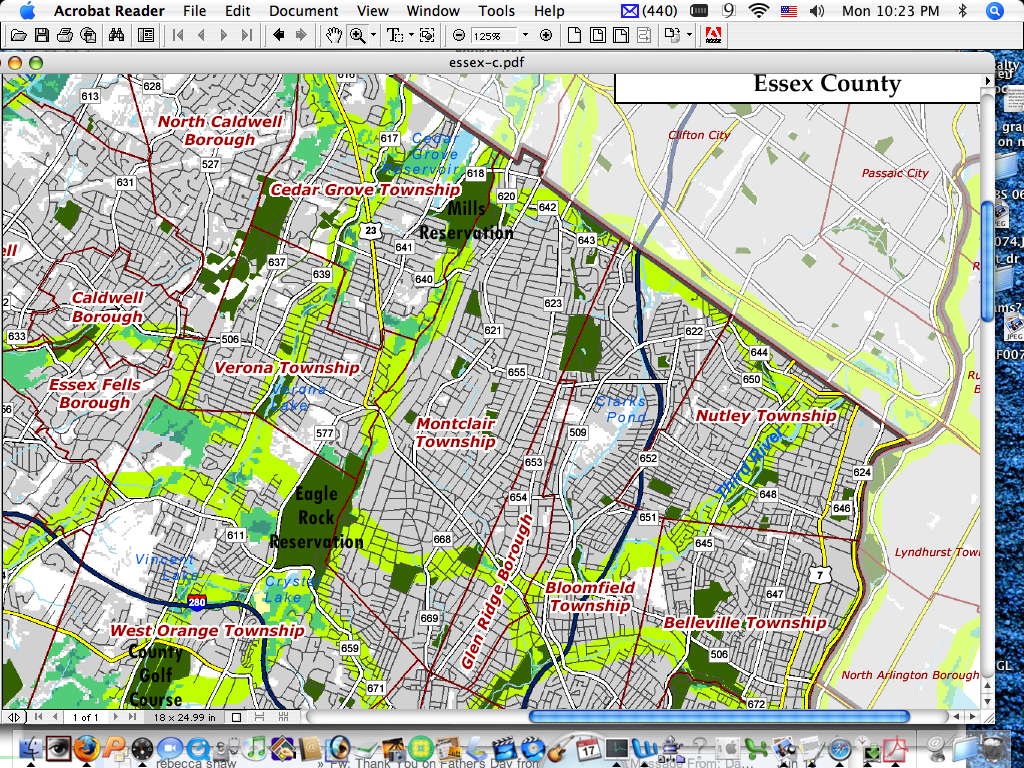
We love maps. We love maps with Greenways even more. Especially maps that show North Jersey counties from a fresh perspective. Garden State Greenway's website currently offers free downloadable county maps in pdf format. Some of the green shaded paths indicate existing Greenway projects. Many others are long term dreams. With YOUR community involvement the dream can become reality:

In order to provide easy access to the Garden State Greenways vision, maps detailing important hubs and their potential connectors were created for each county. To provide context to the user, these maps contain existing open space, municipal boundaries and roads, as well as information for border areas outside the county.
The maps are in .pdf format at a 1:55,000 scale, making them poster-sized for maximum detail. If your interests are not county-wide, you may zoom in and print portions of the map.
Due to the changing nature of New Jersey’s landscape, discrepancies between mapped information and the real world are inevitable. In addition to discrepancies inherent in digital data, open space information can be variably interpreted.

Sunday, June 18, 2006

TownHouse Plans Hit Wall in Wall


From The New York Times:

WALL TOWNSHIP
AS public opinion has generally turned against sprawl in New Jersey, big-lot residential zoning has mostly fallen out of favor in towns around the state.

Admittedly, there are still exclusive enclaves where one- or two-acre lots are the rule, and semirural areas where a four-acre lot, or even a six-acre lot, is the required minimum for a single house. But the New Urbanism style of building multiple units in clusters on smaller parcels in more densely populated areas is the trend most planners and developers are focusing on these days.

Here in the small town of Wall, there is a project that aims to install a New Urbanist design right in the midst of a six-acre-lot neighborhood.

Cedar Hollow Estates is a development of 11 attached town homes occupying a sliver of land in the midst of horse farm country — with five nearby golf courses and a large park, and prime Jersey beachfronts all reasonably close neighbors as well.

Since most of the land available for development in Wall consists of eight small lots on the periphery, or land that lies within the central part of the community that is zoned for six acres per residential unit, Cedar Hollow's town houses may be a vanishing breed hereabouts.

"We think this is going to be the last one, except for the age-restricted projects that are under way here," said Paul R. DeBellis Jr. of Franklin Development Group, the West Paterson company building Cedar Hollow.

Mr. DeBellis, who is a principal of Franklin Development along with his father, Paul R. DeBellis Sr., said his company had vied to build more such projects on other sites, but found itself stymied by the six-acre-per-unit rule governing the available land in the central part of Wall Township. "We want to preserve the character of that part of town," said the township's planner, John Hoffmann.

Cedar Hollow, just off Route 138 and adjacent to wooded property leased by the town for a police station, is a high-end condominium development. The 11 town homes, with an average price of $950,000, will each have 3,600 square feet of space, with three bedrooms, two and a half baths, two fireplaces, a private in-home elevator, a heated two-car garage and a 435-square-foot deck.

Saturday, June 17, 2006

Attack Rabbits Hit Montclair


Our favorite eco-friendly gardener, Pat Kenschaft, sends her latest tale of a growing insurgency from her Homefront near Brookdale Park.:

....while I was sitting reading on an old-fashioned chaise lounge with plastic webbing, I saw a HUGE rabbit at a distance. It was about a foot long, not counting the head. I watched it in amazement, until I thought it was watching me. It's hard to be sure you are having eye contact with a rabbit.

It began coming toward me. Now I was sure we were looking at each other. It walked within a yard of the chair, and I felt a slight fear at this large critter -- a fear that amused me at the time. Then it hopped to maybe ten or fifteen feet away, turned around, and began coming toward me at a startling speed. I was even more amused at my even heightened fear. It bounced under my chair and hit my bottom in an emphatic bounce upward that I could clearly feel through the plastic webbing.

Then it turned around, started to speed toward me again, and this time went under my legs, bouncing upward toward them so that my legs could feel the rabbit "hitting" them. I waited for more, but it turned around briefly tosay goodbyey, and then disappeared into a neighbor's yard.

The (smaller) Easter bunny was back yesterday, looking startlingly normal compared to her small and large relatives. She just sat and looked at me from about six feet away for over ten minutes. I was surprised at how sad I felt when she left me. Rabbits are fun.

Pat

Thursday, June 15, 2006

Small is Big


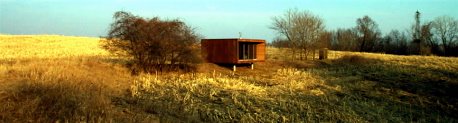
Geoff Warner's Wee House is actually 800 Square Feet. Small is definitely the new big, according to the Wall Street Journal. Says the Journal: "Designers say microhome buyers tend to fall into one of two groups: The majority are looking for a secondary space, either a vacation home or a building near or attached to a primary residence. A minority of buyers are hoping to move into a minihouse full-time, motivated by a desire to simplify their lifestyles or by social and environmental concerns about the amount of living space people need.....Living in a tiny home, as opposed to doing yoga in it or using it for vacations, often appeals to people who want simpler lives that leave less of an ecological "footprint."

Monday, June 12, 2006

Sunday, June 11, 2006

We'd All Like Cheaper Housing but...


We found this item on the website of the National Association of Home Builders.
Sounds like the best thing since sliced bread, but it's only part of the bill:

Bipartisan Bill To Improve Federal Storm Water Program Would Boost Housing Affordability

June 9, 2006 - Legislation introduced yesterday by Rep. John Duncan (R-Tenn.) and 17 bipartisan cosponsors would update and improve Environmental Protection Agency storm water permit and enforcement policies that have needlessly harmed housing affordability, according to the National Association of Home Builders (NAHB).

“Current storm water permitting requirements and regulations are duplicative and burdensome, adding anywhere from $1,400 to $4,500 to the cost of every lot,” said NAHB President David Pressly, a home builder from Statesville, N.C. “The legislation takes into account the differences between residential construction activity and other industries. By taking a more balanced and reasonable approach to storm water management and enforcement, the measure would streamline the permit process, improve compliance and enhance environmental protection.”
H.R. 5558, the “Stormwater Enforcement and Permitting Act,” contains a number of provisions that would protect the environment without needlessly driving up housing costs. The bill would:

- Develop a program to increase awareness among residential construction site operators of their regulatory requirements

- Create a fair and reasonable process by which the Environmental Protection Agency can seek information from residential construction site operators

- Allow builders a one-time chance to correct permit deficiencies that don’t cause environmental harm

- Remove duplicative permit obligations where residential construction site operators discharge into municipal storm sewer systems that are already permitted and regulated

- Allow authorized states to assume the lead enforcement role

- Provide statutory authorization for EPA’s current practice of issuing general permits

At a time when housing affordability is becoming a national issue, and duplicative and burdensome storm water regulations are pushing up the cost of housing and pricing a growing number of families out of the market for homeownership, the time has come to update and improve these requirements, Pressly said. A more consistent and sensible regulatory approach would better protect America’s rivers and streams without unduly increasing housing costs, he added.

More to come....

Saturday, June 10, 2006

Global-Warming on Montclair's Front Burner

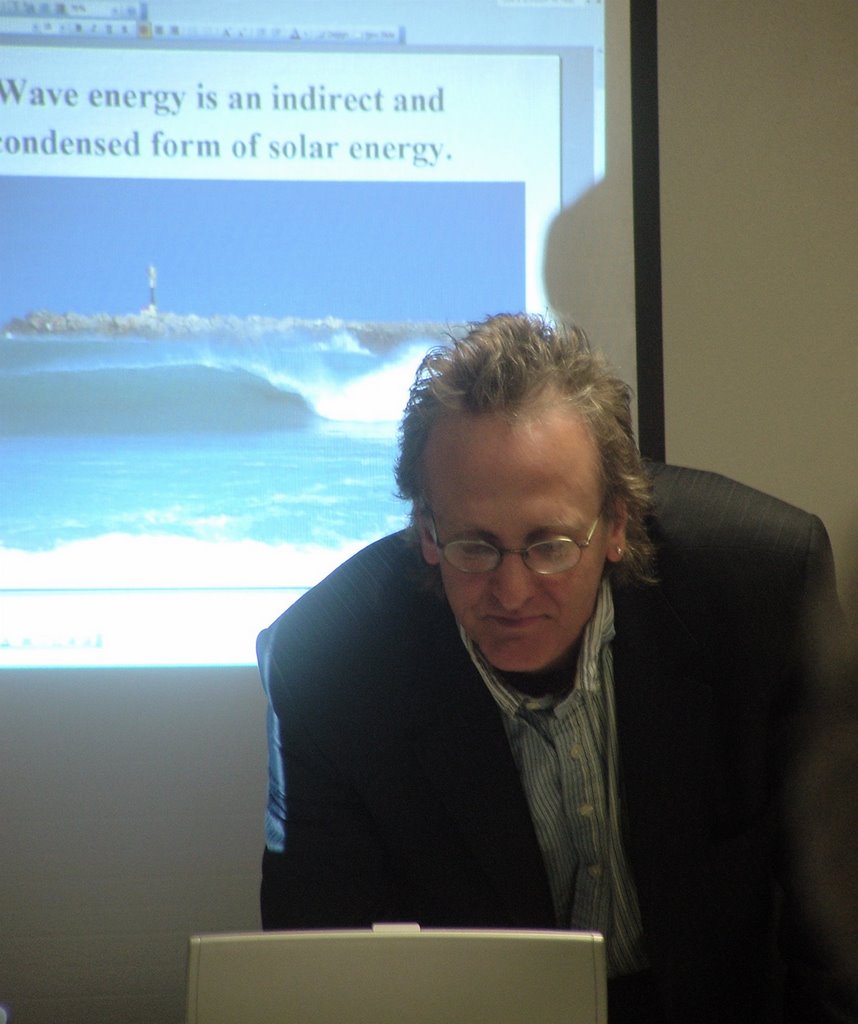
Gray Russell gave his own alternative energy presentation recently in Bloomfield (photo)

Thursday's NJ Star Ledger has an interesting follow up to Al Gore's "An Inconvenient Truth" by reporter Phillip Reade:

Gray Russell has seen Al Gore's global-warming flick "An Inconvenient Truth."

The film starring the former vice president has been pulling in record-breaking audiences and filling up seats at Montclair's Claridge Theater... "I think it's the issue of our time, I really do," said Russell, the hybrid Toyota Prius-driving environmental coordinator.

This summer, Rosdaria Matos and others will be going door to door to raise the pressure on Corzine to follow through on NJPIRG's agenda.
The group's solution checklist includes doubling rebates for solar and other renewable energy; building an 80-turbine, 350 megawatt wind-energy pilot project offshore and enacting a gas-guzzler fee on vehicles that get 22 miles per gallon or less, with the revenues used as incentives for fuel efficiency.
Yesterday, Brendan Gilfillan, a spokesman for the governor, pointed to Corzine's record in the U.S. Senate, including his "yea" votes on caps on greenhouse emissions -- which failed -- and his vote against an energy-bill amendment that he said did not go far enough to reduce emissions.

"Despite the lack of leadership on the federal level, Gov. Corzine remains committed to doing what he can in the state to address this global challenge," Gilfillan said.

Last week, in its second weekend, Gore's documentary broke into the Top 10 with $1.33 million in ticket sales, even though it was playing in only 77 theaters. It draws parallels between rising temperatures and their resulting catastrophic hurricanes and cycles of drenching floods and bone-drying drought.

Montclair was chosen, in part, because it is the first New Jersey town to win the Board of Public Utilities' Clean Energy Leadership Award. "We're walking the walk, not just talking the talk," Russell said of Montclair's "green" reputation.

Montclair has traffic lights with LED, or light-emitting diodes, saving $10,000 a year in energy costs; has a small fleet of municipal vehicles powered by compressed natural gas; and is about to build a school with solar panels and a geo- thermal heating and cooling system.

In the autumn, Russell joined an Earthwatch team of scientists on Canada's northern reaches, near the Arctic Circle, to study the permafrost, moisture that lies below the ground and, when fully frozen, deflects the sun's heating rays.

That permafrost, in places, is now forming puddles, and the sun's heat is instead absorbed by the water, speeding up the melting and releasing greenhouse gases in the process.

"The permafrost, for the first time in 10,000 years, is thawing," he said.

Friday, June 09, 2006

Closet Phobia


From Pogue's Posts:

There’s a housing complex in Hong Kong whose 100 rooms are each ten feet square.

Photographer Michael Wolf painstakingly took a photograph in each one, showing its occupant and furniture. The result is a set of 100 bizarre, thought-provoking photos–a theme and variations.

One look, and you’ll never complain about the size of your place again.

Thursday, June 08, 2006

Ecoresin


3form is generating buzz in design circles with a very cool material called eco-resin .
Ecoresin is a proprietary translucent, co-polyester sheet material that contains a significant amount of recycled content but also retains its core physical properties. But what is it used for? Ecoresin is used as the building block to produce products such as those pictured above and results in architectural panels that have superior optical, mechanical and fire properties and that promote clean air quality.

We’re not completely sure what all that means, but their website looks really cool. Plus, they are a contributor to the National Building Museum’s The Green House: New Directions in Sustainable Architecture and Design - an exhibit investigating new green home ideas, solutions and debates.

Monday, June 05, 2006

Global Warming Reality Bites

From Sunday's Times Week In Review:
While much of the discussion of climate change focuses on the big picture of rising sea levels and increasing global air and ocean temperatures, the Duke finding helps explain the smaller picture. Climate change may be a real nuisance in the backyard.

Poison ivy is only the latest entry on a growing list of pests, both plant and animal, that may be nurtured. Japanese beetles, a voracious eater of turf and trees, live longer under higher levels of carbon dioxide. The ranges of other invasive insects, like fire ants, are expected to increase as the planet warms. Disease-carrying ticks have already been shown to have moved northward in Sweden. Mosquitoes could fly farther, too.

Sunday, June 04, 2006

Where to Spend that Summer Weekend?


Or should you just relax and watch your garden grow?
David Carr writes "You Are Where You Tan" from a Montclair perspective in the NY Times:

In our neighborhood, everyone has a version of Someplace Else. The people across the street split for Fire Island. The couple next door have a place in the Hamptons they give over to renters for most of the season, enjoying it on the margins. Our best friends on the block belong to a beach club on a tidy lake in the low-slung mountains of Jersey, and many of the others head out to destinations near and far on the Jersey Shore....There is something terribly existential in all of this: Work all of your life to scratch out a piece of suburban idyll, and then work some more so you can afford to get the hell away from it.

Friday, June 02, 2006

MeadowFest


Saturday, June 10, 2006
Sunday, June 11, 2006 - raindate

11:00am - 4:00pm

Laurel Hill County Park, Secaucus

MeadowFest(formerly RiverFest) is the centerpiece eco-tourism event in the region and is a platform to highlight the activities and purpose of the New Jersey Meadowlands Commission through community building. MeadowFest's target audience is families, couples and individuals interested in wholesome activity and community fun.

The day-long event will feature educational activities, games, music, food and more. There will also be narrated pontoon boat tours along the Hackensack River that will run throughout the day. Prior to the day's events, the Meadowlands Liberty Convention and Visitors Bureau will host the first Meadowlands Liberty Eco-Triathlon.

Thursday, June 01, 2006

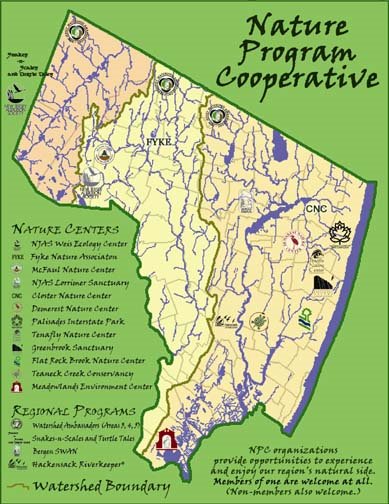
Nature Program Cooperative


Nature Program Cooperative is a network of environmental organizations.
NPC member organizations provide opportunities to experience and enjoy our region's natural side. Members of one are welcome at all. (Non-members also welcome.)